

|
Early Ojibwe peoples first used the "grand portage"
to link inland winter camps to summer homes at Grand Portage Bay
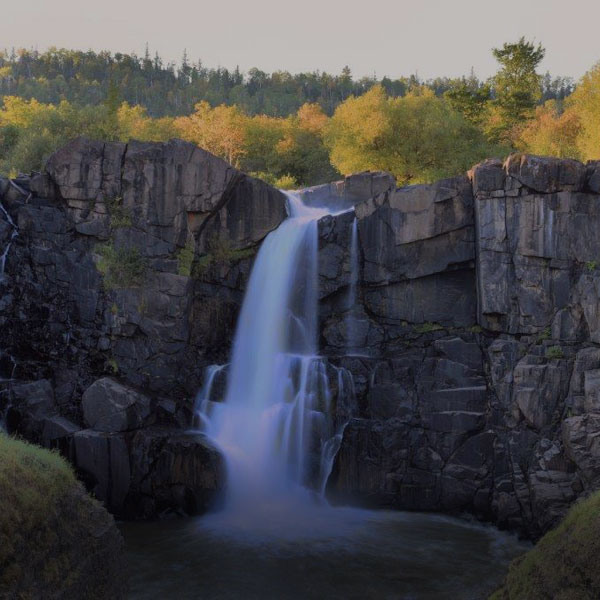
on Lake Superior. This 8.5-mile trek up the Pigeon River bypassed
a series of waterfalls, including High Falls. From there, the
Grand Portage people gained access to the chain of lakes and rivers
that led to the vast plains of Canada. Centuries later, European
fur traders followed their lead and Grand Portage became the inland
headquarters for a worldwide fur trade. From 1730 to 1805 this
trading post hosted hundreds of traders, partners and voyagers
as goods and cultures from all over the world met at Grand Portage
in a flurry of trading activity.
The Ojibwe peoples still make their home at Grand Portage and
celebrate traditional culture. The Grand Portage National Monument,
established in 1960, includes the archeological remains of the
Northwest Company Depot as well as a full restoration of the trading
post, stockade, Great Hall, surround palisades and more. Open
mid-May through mid-October, visitors catch a glimpse of an era
when the fur trade made Grand Portage an emporium of goods and
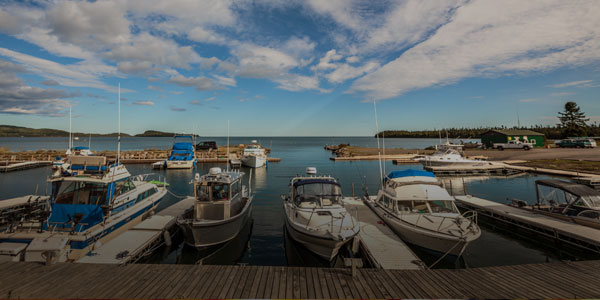
melting pot of cultures. Look out over the bay and imagine a flotilla
of huge, heavily laden canoes arriving from as far east as Montreal.
Grand Portage was, literally, the Gateway to the West.
Rendevous Days in mid-August also helps preserve Ojibwe traditions
and celebrate new ones by bring people together from all over
for a weekend filled with activity pow-wow dancing, softball,
a 1 and 3-mile walk, turkey shoot, horseshoe tournament and games
for the kids.
Sled dog racing was once a way of life for the Ojibwe. Before
the time of European settlers, and boundaries between the United
States and Canada, the people of Grand Portage traveled inland
from Lake Superior during the winter months in pursuit of their
wild game food supply. Winter travel proved difficult with no
modern day roads or vehicles. The sled dog not only provided the
strength to pull heavy loads, but also served as a traveling companion
during cold winter hunts.
The people of Grand Portage traveled north to the Nipigon region,
east to Isle Royale and west toward Winnipeg in pursuit of food.
Their travels took them many miles, which were accomplished primarily
through the tireless aid of their sled dogs. It is this "passage"
from summer to winter camps that the people of Grand Portage remember
and commemorate at the annual Grand Portage Passage Sled Dog Race.
|